Section 106 and PA State History Code Compliance
Clio Consulting, LLC is expert in navigating compliance with local, state, and federal historic preservation regulations.
Section 106 of the National Historic Preservation Act of 1966 directs those planning projects with federal funding or licenses to consider their effects on historic resources. The PA State History Code is a similar law pertaining to state-supported projects. Clio Consulting assists with all aspects of compliance with these regulations, including identifying historic resources, evaluating effects on historic resources, and recommendations for resolving any adverse effects.
More information from PA State Historic Preservation OfficeMore information from the Advisory Council on Historic Preservation
B’NAI ISRAEL SYNAGOGUE
Beacon Communities
2019-present
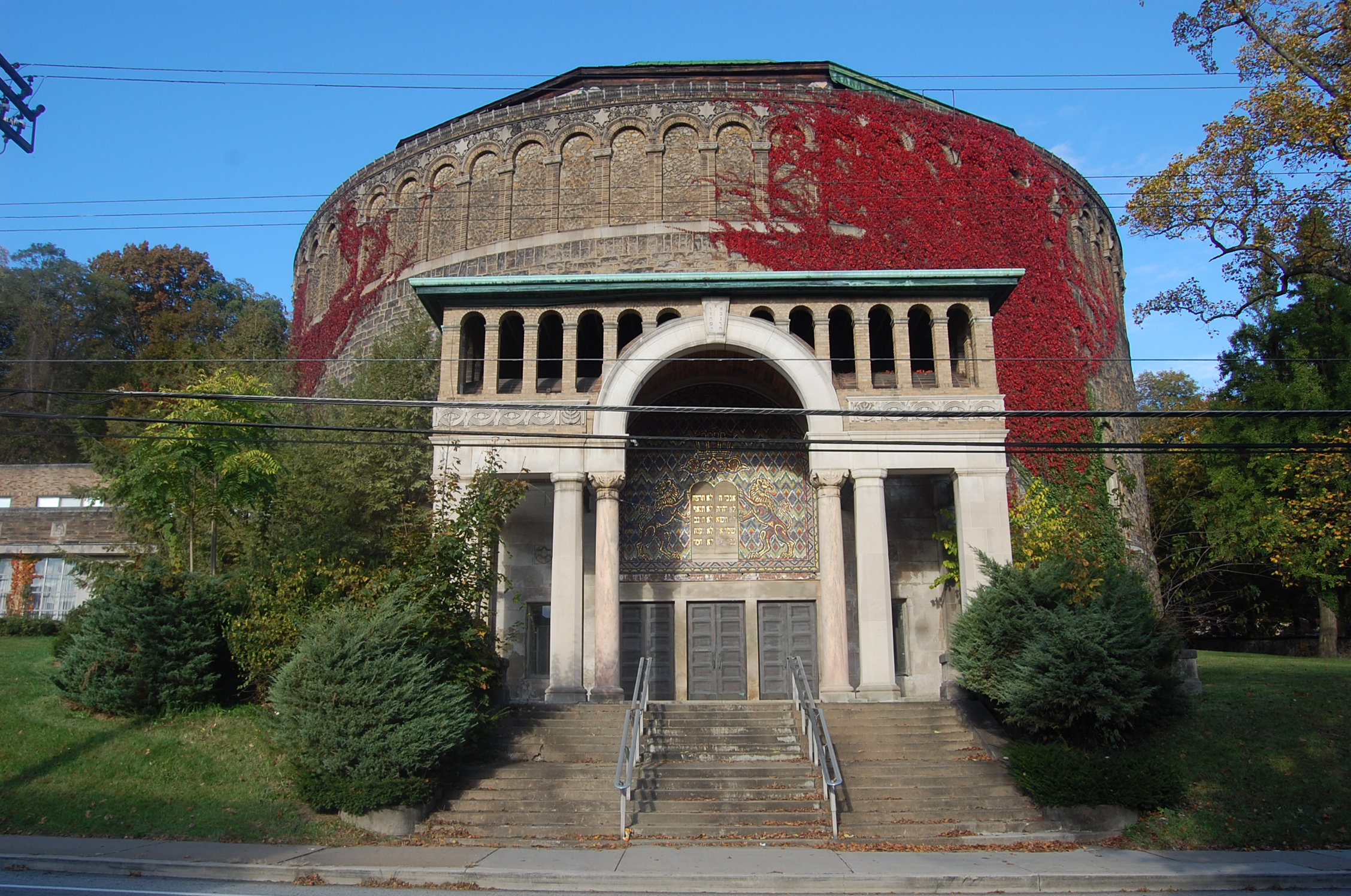
Beginning in 2019, Clio Consulting has worked with Beacon Communities and PA SHPO to comply with Section 106 for the rehabilitation of B’nai Israel Synagogue. Important steps included documenting B’nai Israel’s eligibility for the National Register; acting as liaison among the developers, their architects, and SHPO to navigate the process and the Secretary of the Interior’s Standards; convening a stakeholders’ meeting; drafting an MOA to guide conversion to affordable housing that will serve the community; and nominating the property as a City Historic Landmark. B’nai Israel is an architectural treasure by Henry Hornbostel with additions by Alexander Sharove, but two decades of vacancy had left its majestic rotunda in peril of being too far gone to rehabilitate. Such spaces pose difficult dilemmas for preservationists and developers alike: how to maintain their grandeur while accommodating building programs that the community can support.
BEDFORD DWELLINGS
Housing Authority of the City of Pittsburgh
2023
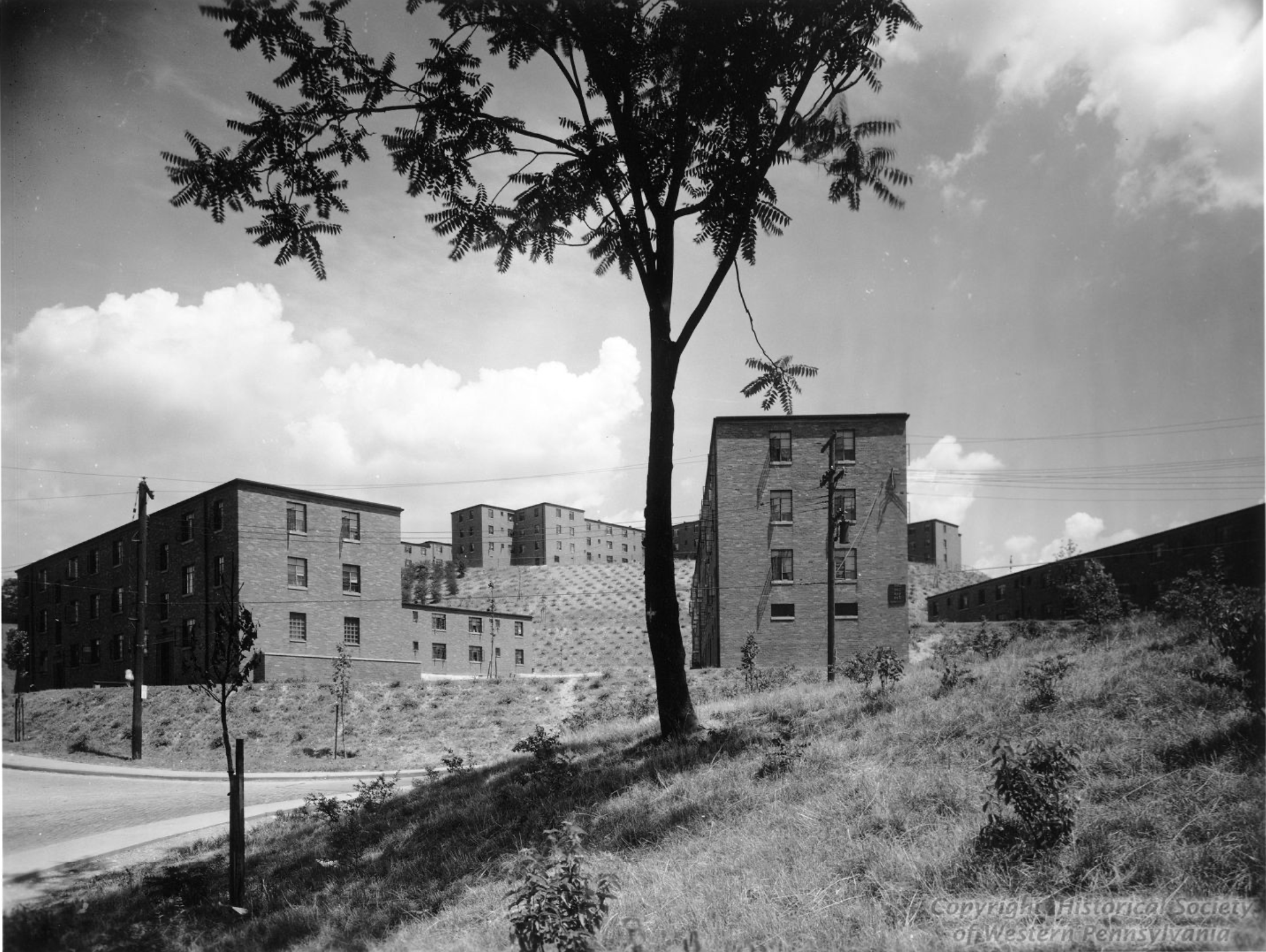
Clio Consulting documented the Bedford Dwellings public housing complex, conducting a National Register eligibility study, prior to its demolition and replacement. Among Pittsburgh’s—and the nation’s—first public housing developments, Bedford Dwellings was built in 1940 and received additions which nearly doubled its size in 1951. By the 1990s, it was clear that self-contained public housing had left a legacy of unintended consequences, and federal programs provided new directions for assisting with affordable housing. Bedford Dwellings no longer functioned well for its intended use and, despite historical significance, could not be successfully adaptively re-used.
BRIGHTON HEIGHTS SENIOR CENTER
City of Pittsburgh and AE7 Architects
2022
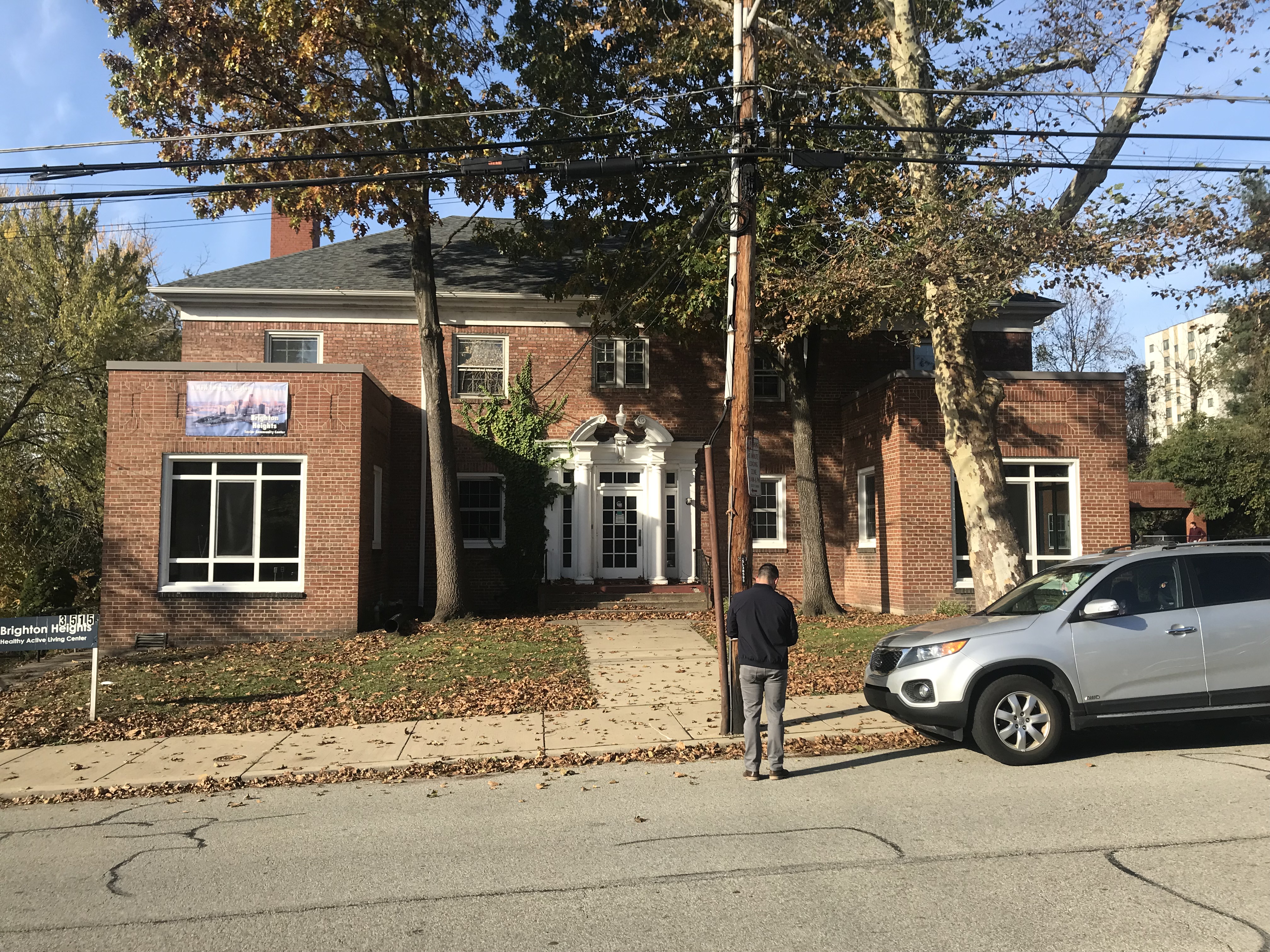
Clio Consulting’s research into the history of the Brighton Heights Senior Center uncovered the little-known history of the Rebekahs: the female counterparts to the all-male Independent Order of Odd Fellows, a fraternal organization whose charitable mission included the care of orphans. Both the I.O.O.F. and the Rebekahs built retirement homes for their elderly members. In Pittsburgh, the I.O.O.F. built a large orphanage in Brighton Heights in 1923 (now a public middle school), and ca. 1930, the Rebekahs constructed a smaller home on its campus for elderly single women. The Rebekah Home closed in 1970, but still serves senior citizens as the Brighton Heights Senior Center. Clio Consulting’s research enabled it to be determined eligible for the National Register prior to its renovation by the City of Pittsburgh.
CARNEGIE FREE LIBRARY OF ALLEGHENY
Pittsburgh Children’s Museum
2017
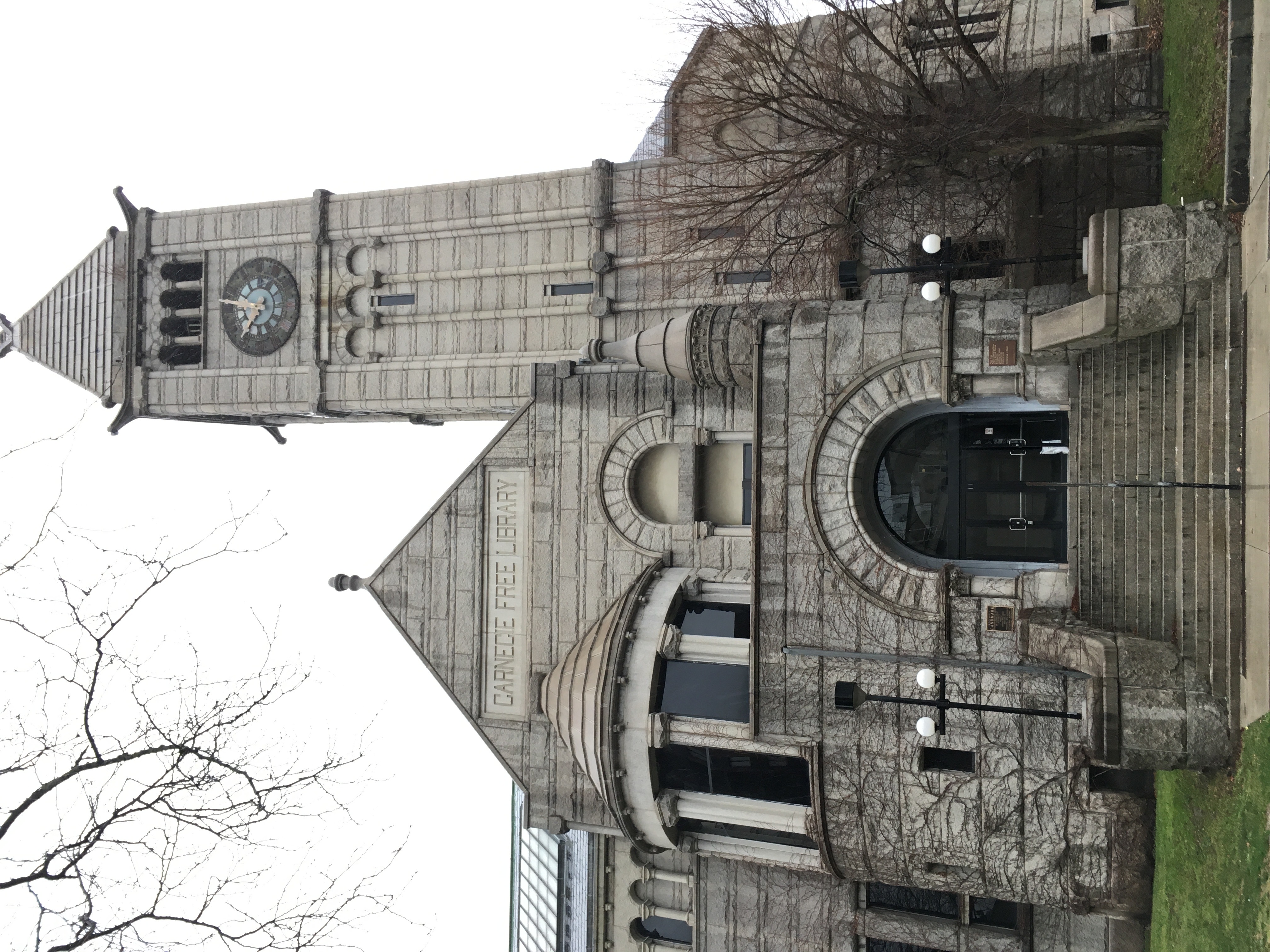
Clio Consulting worked with the Children’s Museum of Pittsburgh to comply with PA SHPO and Pittsburgh HRC review processes— sometimes navigating different interpretations of best preservation practices—in incorporating the former Carnegie Free Library of Allegheny into its North Side campus. Along the way, we adapted to surprises such has the discovery of original paintings and other work under later finishes. The library is a historic building of national significance that needed a new purpose once its original occupant moved to a new premises. An unsympathetic 1970s renovation had preserved the building envelope, but disguised or destroyed most of its ornate Victorian interior. With its own history of successful adaptive reuse of historic buildings, the Children’s Museum saw an opportunity to expand its campus and its mission. The completed project, known as MuseumLab, returns this landmark to use as a community-based asset.
HAYS MANOR
Allegheny County Housing Authority
2023
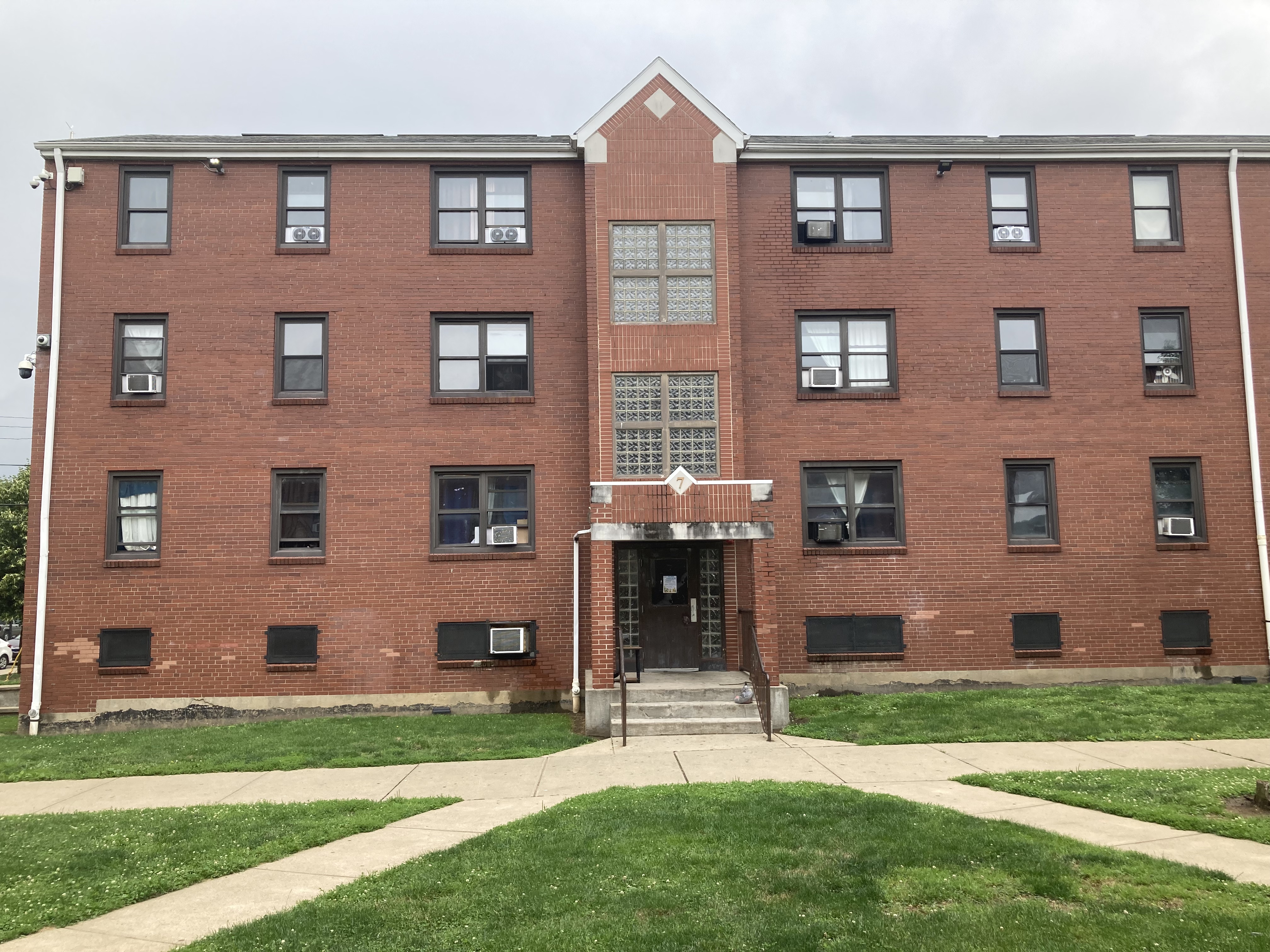
Clio Consulting documented the history and design of this public housing prior to its redevelopment under a federal Choice Neighborhoods grant to transform underserved and struggling communities. In 1955, Hays Manor was the third public housing community to be built in McKees Rocks, and one of the last commissions of architectural polymath Alexander Sharove. When downtown redevelopment displaced over 100 residents in 1957, the Allegheny County Housing Authority explored a then-innovative idea to purchase adjacent, existing row houses as new public housing units to rehouse these families. However, this did not come to pass, and Hays Manor expanded in the conventional manner, with five new apartment buildings in 1959.
LABOR LYCEUM
Bridging the Gap Development
2017
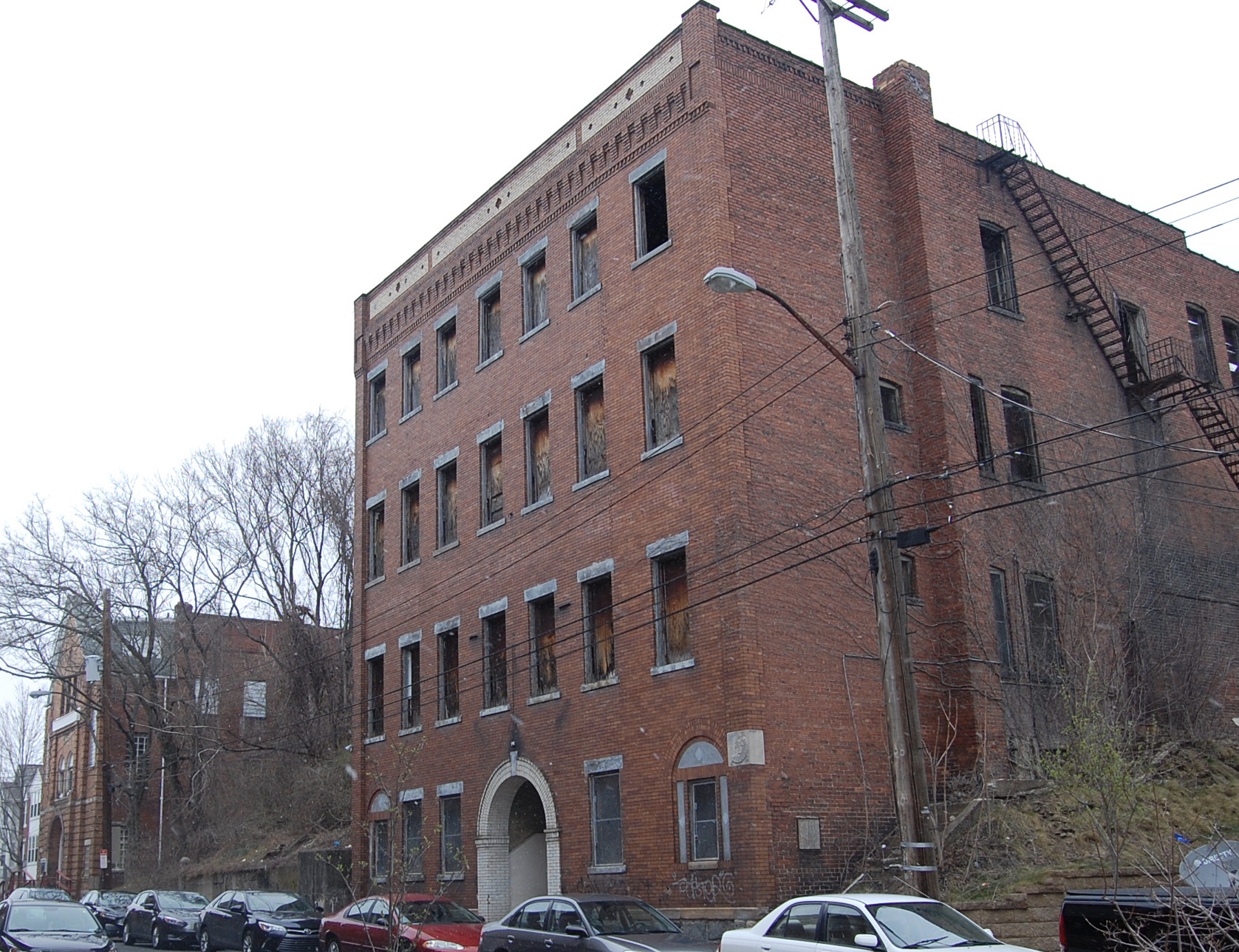
Clio Consulting conducted a National Register eligibility evaluation of this fascinating building prior to its demolition. Constructed in 1916 by the local branch of a nationwide Jewish socialist organization, the Lyceum functioned as a Jewish union hall, cultural and community center, and locus of much of the secular striving of the first generation of Jewish immigrants in Pittsburgh. Its architecture, plain by design, contained offices, meeting rooms, a library, and a large auditorium. Unfortunately, after closing in 1930, the building stood vacant and deteriorating for decades. It was unable to be saved, but its sole ornament, a stone tablet bearing the slogan “Workers of the World Unite,” was salvaged and donated to the Historical Society of Western Pennsylvania.
MERCHANTS SAVINGS AND TRUST BUILDING
ACTION-Housing
2022
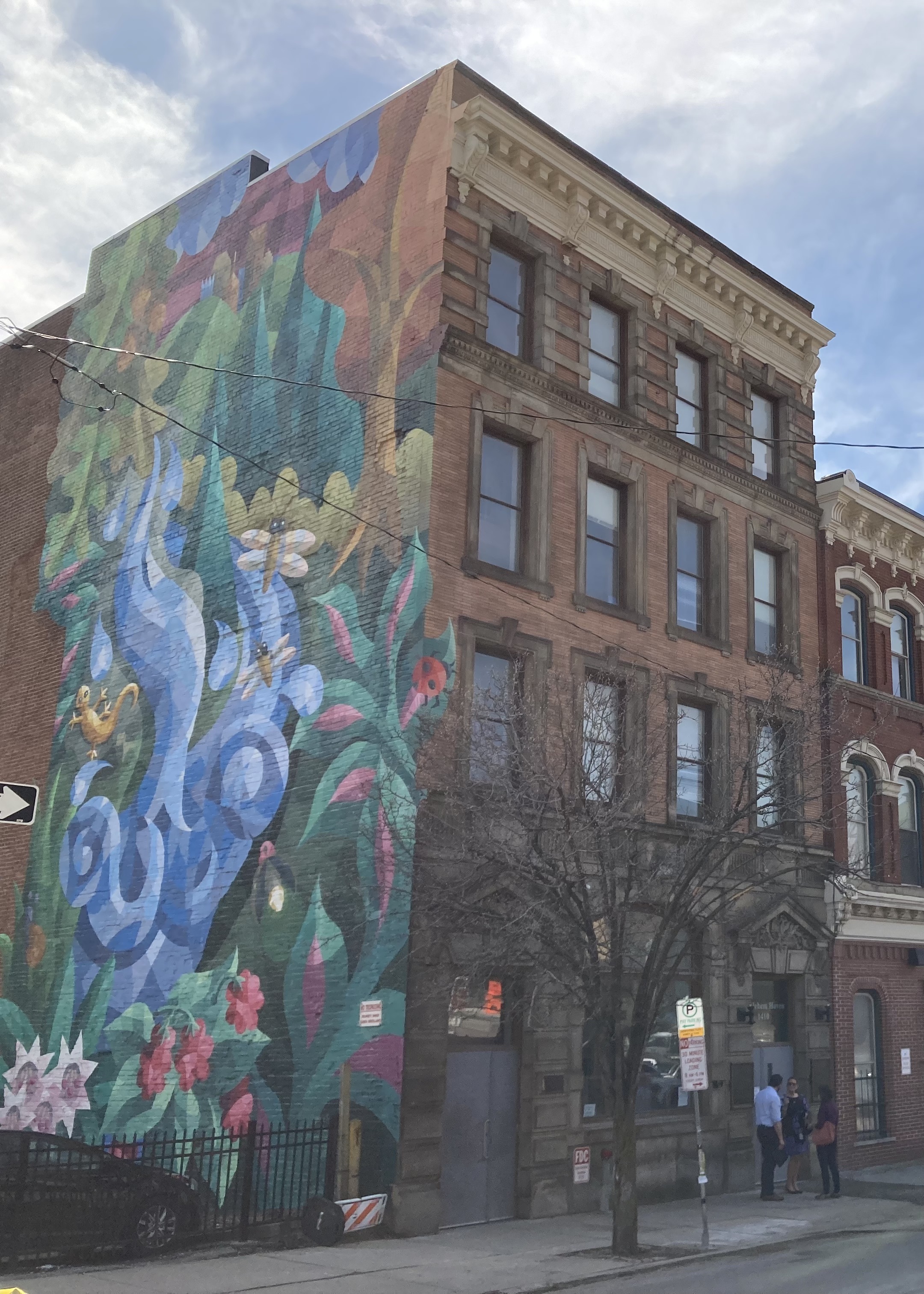
Clio Consulting conducted a National Register eligibility evaluation for the Merchants Savings & Trust Company building, built in 1908 to fulfill a need for financial services in the Hill District, especially to Jewish business on bustling lower Fifth Avenue. The building is one of vanishingly few survivors to tell a piece of this story of the Lower Hill before urban renewal. Its Classical Revival design is typical of banks of the period, and it had “French Flats,” as apartments were then called to distinguish them from tenements, on its upper floors. Today the building continues to serve the community as housing for persons at risk of homelessness.
PASSHE CAMPUSES
LGA Associates
2021
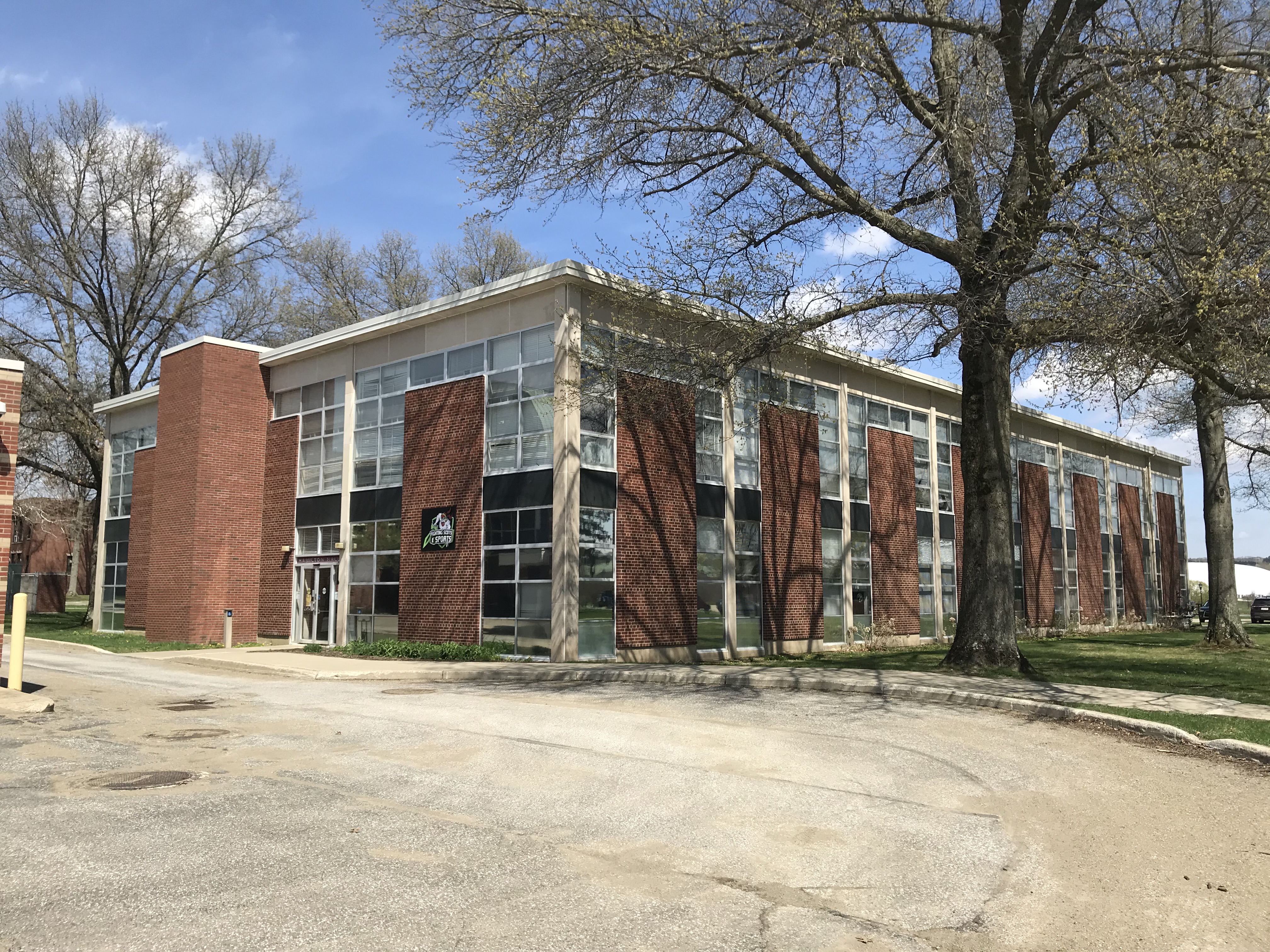
Clio Consulting conducted National Register eligibility evaluations for three Pennsylvania State System of Higher Education campuses—Indiana, California, and Edinboro—with a focus on their post-WWII resources. Archival research, study of historic maps and aerial views, and in-person site observation led to detailed analyses of the history, significance, and integrity of the campuses and of individual buildings. The PASSHE was created out of the state’s older system of public teachers’ colleges in the early 20th century and underwent an intensive period of expansion after World War II, when the colleges also transitioned to universities. Now the system is adjusting to decreasing enrollments. Its restructuring brought about assessments of existing campuses to identify present and future building needs.